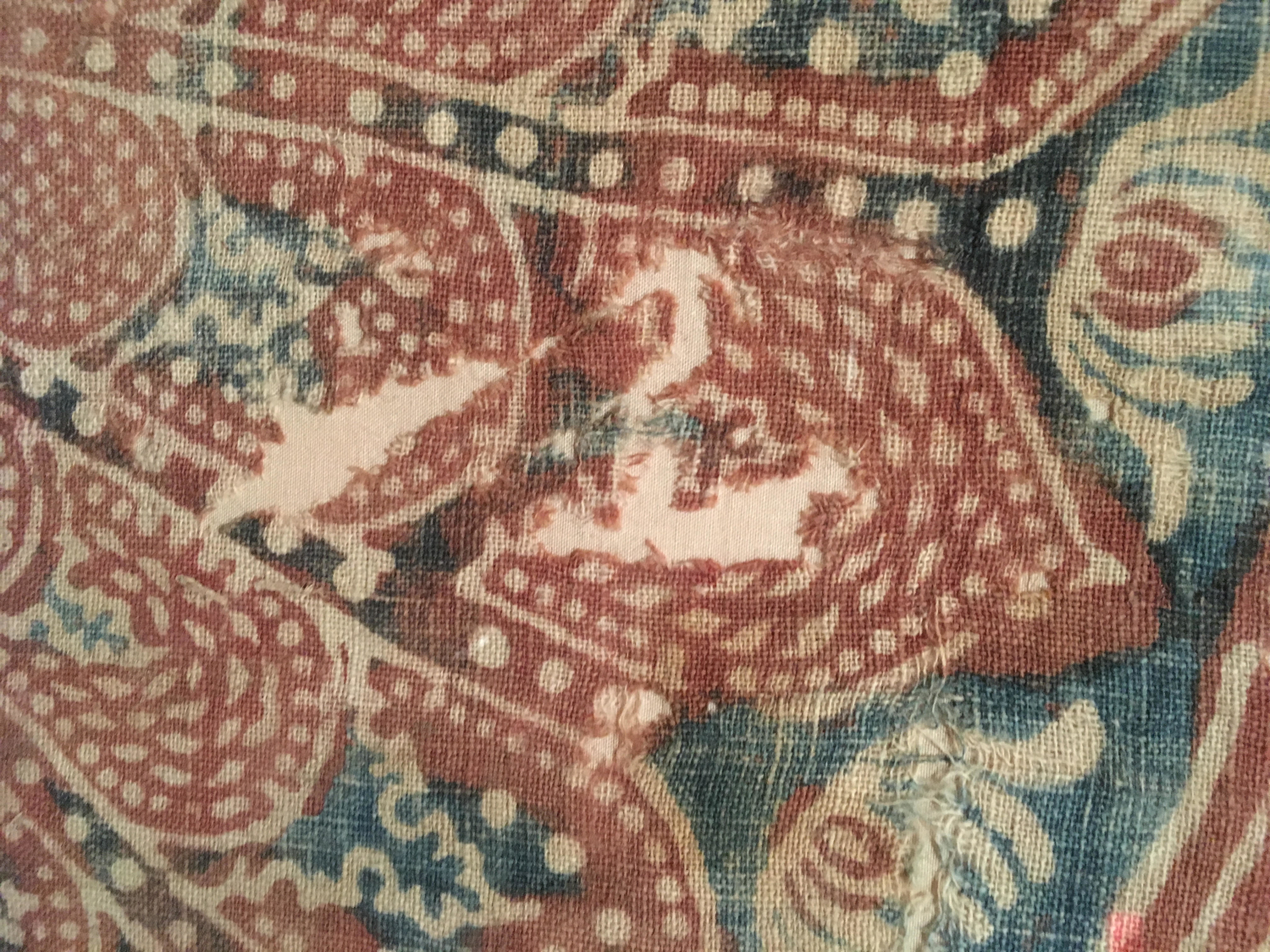
Fustat cotton from the exhibition ‘Fabric of India’ at the Cincinnati Art Museum, 2018. Photograph by Carla Tilghman
with Carla Tilghman, Independent Scholar
Seeds of seismic change are often planted incrementally and subtly. The first part of this talk will focus on the early appearance of Egyptian cottons used in fustian production in Italy and Germany. Among the many changes that signalled the end of the European Late Medieval/Renaissance period, the introduction of Indian cotton, dyed and painted, deserves some specific attention. The initial importation and use of pintados (painted and printed clothes), and calicoes (plain woven cottons) from what is now India can be traced via clothing inventories, wills, and commercial records. The trickle of these novelty clothes into European courts and households would rapidly become a flood that challenged the wool and linen industries and eventually displaced them–almost entirely, in the case of linen. From the 1507 post-mortem inventory of Beatrice of Portugal (mother of Manuel I) to Henry VIII’s wardrobe inventories, to Southampton port inventory records, Carla will trace the first mentions of and initial impact on European textile use of indiennes, the compelling painted and printed textiles from Goa, Bom Bahia, and many other ports along the southern Indian west and east coasts.
Carla has been playing with thread since she was twelve. After a 12-year career as a paramedic, she ‘caved to the siren call of the Textile’ and earned an MA in Art History from the University of Kansas and an MFA from Kent State University. She now happily focuses on historical textile research: teaching, weaving, and thinking about trade routes and loom technology.